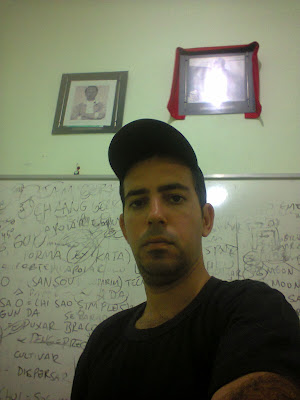
quinta-feira, 5 de janeiro de 2017

Uma breve introdução ao Wing Chun - A brief introduction to Wing Chun

Para começar o ano de 2017, vamos fazer uma pequena introdução ao sistema Wing Chun, de maneira que esse texto é direcionado ás pessoas que ainda não começaram seu treinamento, mas que tem curiosidade em conhecer um pouco sobre esta arte marcial. Tentei resumir as informações ao máximo o que pude e aclarar alguns pontos de maneira simples, para facilitar o entendimento. Espero que apreciem.

Duvidas e questões, podem mandar para o e-mail aldarylucena@hotmail.com


To start the year 2017, we will do a little introduction to the Wing Chun system, so that this text is directed to people who have not started their training, but who is curious to know a little about this martial art. I tried to summarize the information as much as I could and to clarify some points in a simple way, to facilitate the understanding. I hope you enjoy it.


Doubts and questions, can send to the email aldarylucena@hotmail.com


Wing Chun Kung fu
Wing Chun Kung Fu
Wing Chun Kung fu é uma arte marcial oriunda do sul da china e que possui por volta de 450 anos.  Sua elaboração é atribuída á uma Abadessa chamada N’g Mui e seu desenvolvimento teve seu apogeu moderno á partir dos anos 40/50 em Hong Kong com a chegada do Chung Si Ip Kai Man, popularmente conhecido como Yip Man,vindo de FoShan ( Fatsan),  á ilha que era então, protetorado britânico. Ip Man foi o ultimo grande patriarca do estilo.A transmissão do sistema Wing Chun se manteve restrita aos ciclos familiares e somente pessoas seletas tinham acesso ao conhecimento até que Ip Man ‘’abrisse as portas’’ para o público ao ensinar a arte em Hong Kong de maneira publica.

Na teoria, Wing Chun preconiza o uso da força biomecânica através da ação conjunta da base, quadril e ombros ( para as linhagens que trabalham a ponte longa) ou a base , quadril e cotovelos ( para as linhagens que trabalham a ponte curta), o uso de estratégias inteligentes para economizar tempo, espaço e energia, e a ideia de que uma pessoa mais fraca e menor pode se desvencilhar de um atacante maior e mais forte á partir da técnica apropriada ao invés da força bruta, buscando sempre atacar pela menor distancia entre sua arma ( mãos e pés) e o alvo escolhido, cobrindo e atacando ao mesmo tempo de forma simultânea. Preconiza ainda o uso estrutural do corpo como ferramenta principal para a execução técnica e a aplicação de seus conceitos e princípios em situações não-controladas.
( O patriarca Ip Man)
( The late Grandmaster Ip Man)

È dito que o Wing Chun possui apenas três formas. Mas isso se refere às formas de mãos vazias do sistema. Todo o sistema Wing Chun é composto por seis níveis (ou fases vivenciais, ou mesmo domínios) de treinamento e que são divididos em duas trilogias. Essas fases recebem o nome de suas respectivas formas e contém todo o cerne teórico e prático do sistema. Essas duas trilogias subdividem o treinamento em duas fases distintas; O treinamento de mãos livres do sistema e o treinamento com aparelhos subsidiários ou adicionais e armas.  As três primeiras fases do sistema wing chun e as suas respectivas formas são denominadas;

Wing Chun Kung Fu is a martial art from southern China and has around 450 years. Its elaboration is attributed to an Abadessa called N'g Mui and its development had its modern apogee from the years 40/50 in Hong Kong with the arrival of Chung Si Ip Kai Man, popularly known like Yip Man, coming from FoShan (Fatsan ), To the island that was then, British protectorate. Ip Man was the last great patriarch of the style. The transmission of the Wing Chun system remained restricted to the familiar cycles and only select people had access to the knowledge until Ip Man '' opened the doors '' to the public when teaching the art in Hong Kong publicly.


In theory, Wing Chun advocates the use of biomechanical force through the joint action of the base, hip and shoulders (for lines that work the long bridge) or the base, hip and elbows (for the lines that work the short bridge), the Use of intelligent strategies to save time, space, and energy, and the idea that a weaker and smaller person can break free from a bigger and stronger attacker from proper technique rather than brute force, always striving to attack at the smallest distance Between your weapon (hands and feet) and the chosen target, covering and attacking simultaneously . It also advocates the structural use of the body as the main tool for the technical execution and application of its concepts and principles in uncontrolled situations.

Wing Chun is said to have only three forms. But this refers to the empty-handed forms of the system. The entire Wing Chun system consists of six levels (or experiential phases, or even domains) of training and which are divided into two trilogies. These phases are named after their respective forms and contain the whole theoretical and practical core of the system. These two trilogies subdivide the training into two distinct phases; The hands-free system training and training with subsidiary or additional appliances and weapons. The first three phases of the wing chun system and their respective forms are called;


Siu Lin Tau
(Algo como ''Pequena ideia inicial'') 
Chum Kiu
(Possuindo diversas transliterações. Em nossa família, chamamos de ''Afundar a ponte'')
Biu Ji
( Dedos penetrantes, ou Dedos voadores, ou ainda Bússola padrão)


Onde podemos considerar;

Siu Lin Tau

(Something like '' Little imagination '')
Chum Kiu
(In our family, we call it '' Sinking the Bridge '')
Biu Ji
(Penetrant Fingers, or Flying Fingers, or even Standard Compass)


Where can we consider;


Siu Lin Tau – O primeiro, mais básico e mais importante nível ou fase de todo o sistema Wing Chun. Ela nos dá os movimentos e conceitos mais básicos de todo o sistema e irão formar a base teórica onde todo o sistema irá se estruturar. È a forma mais elementar, mas ao mesmo tempo, a mais importante de todas. Um bom domínio do Siu Lin Tau fará com que o praticante tenha bom domínio de todas as fases posteriores.


Siu Lin Tau - The first, most basic and most important level or stage of the entire Wing Chun system. It gives us the most basic movements and concepts of the whole system and will form the theoretical basis where the whole system will structure itself. It is the most elementary form, but at the same time, the most important of all. A good command of the Siu Lin Tau will make the practitioner have good control of all subsequent phases.


Chum Kiu – Segunda forma do sistema engloba o treinamento em conjunto da tríade, base, quadril e ombros e enfoca a mobilidade. È considerada a fase intermediária do sistema. Nesta fase, o praticante inicia o treinamento adicional de Chi Sau, que visa desenvolver habilidades específicas do praticante, além de dar o primeiro contato  com ‘’os oito chutes de wing chun’’ em sua forma mais elementar.

Chum Kiu - Second form of the system encompasses the training together of the triad, base, hip and shoulders and focuses on mobility. It is considered the intermediate phase of the system. At this stage, the practitioner initiates additional Chi Sau training, which aims to develop practitioner-specific skills, in addition to first contacting "the eight wing chun kicks" in its most elemental form.


Biu Ji – È considerada a fase avançada do sistema. Biu Ji enfatiza a geração de força através dos ombros e a geração de força através da cintura escapular e omoplatas. O tão famoso ‘’soco de uma polegada’’, imortalizado pelo lutador/ator Bruce Lee vem justamente daí. Também possui uma estratégia mais elaborada para o combate e acrescenta técnicas mais avançadas em Chi Sau e refina as movimentações de base ao passo que acrescenta o treinamento de mais chutes.

Biu Ji - It is considered the advanced phase of the system. Biu Ji emphasizes the generation of strength through the shoulders and the generation of force through the shoulder girdle and shoulder blades. The so famous '' one-inch punch '', immortalized by fighter / actor Bruce Lee comes just from there. It also has a more elaborate strategy for combat and adds more advanced techniques in Chi Sau and refines the base moves while adding the training of more kicks.


 Para os treinamentos adicionais, teremos;
For additional training, we will have;

Fighting Drills; Somando os elementos técnicos que consistem e são oriundos das formas, com outros elementos técnicos e movimentações de base, podemos criar combinações e re-combinações para a técnica de luta efetiva. O treinamento consiste em Jow Sau, mãos em repetição, que nada mais é do que repetir essas ''ferramentas de combate'' ou essas combinações junto com um parceiro de treino que irá atacar de maneira incisiva.


(SiFu e seu irmão de kung fu Cleber Domingues há alguns anos atrás)
(SiFu and his Kung Fu Brother Cleber Domingues few years ago)


Fighting Drills; Adding the technical elements that consist of and come from the forms, with other technical elements and basic movements, we can create combinations and re-combinations for the technique of effective fight. The training consists of Jow Sau, hands in repetition, which is nothing more than to repeat these '' tools of combat '' or these combinations along with a training partner who will attack in an incisive way.


 Chi Sau; È um treinamento exclusivo do sistema wing chun e não é encontrado similar em nenhum outro estilo de luta. Desenvolve a noção de cobrir espaços em uma curta distancia, além de atributos como reflexos, reações rápidas, estrutura corporal, entre outros.
Chi Sau; It is an exclusive training of the wing chun system and is not found similar in any other fighting style. It develops the notion of covering spaces in a short distance, in addition to attributes such as reflexes, rapid reactions, body structure, among others.


Lap Sau; Os atributos vistos em Chi Sau podem ser trabalhados neste exercício dinâmico de troca de posições, sendo um trabalho bastante específico.

Lap Sau; The attributes seen in Chi Sau can be worked on in this dynamic exercise of position exchange, being a very specific work.


Maai San Jong; Treino de sparing no circulo. Consiste em um circulo de 5 pessoas e uma no centro. A pessoa no centro terá de aplicar as técnicas do sistema contra ataques mais elementares dos atacantes do circulo, que poderão acertar os golpes de forma realista. Porém o praticante de wing chun terá de controlar seus contra-golpes. Visa treinar a movimentação, giro de base, reação rápida entre outros hábitos.


Maai San Jong; Sparing training in the circle. It consists of a circle of 5 people and one in the center. The person in the center will have to apply the techniques of the system against the most elemental attacks of the circle attackers, who can realistically hit the blows. But the wing chun practitioner will have to control his counter-punches. It aims to train the movement, basic rotation, quick reaction among other habits.


Kui Noi Gerk ( Oito chutes de Wing Chun) Ou Chutes sem sombras, ou ainda Chutes abaixo das saias; Refere-se ao treinamento e desenvolvimento das energias de chutes do sistema. O Wing Chun é popularmente conhecido como um estilo que possui poucos chutes, mas isso não é de todo verdadeiro. Os chutes do sistema são extremamente árduos de se praticar e extremamente fortes.


Kui Noi Gerk (Eight kicks of Wing Chun) Or Kick With no Shadows or even Kicks under the skirt; Refers to the training and development of the kicking energies of the system. Wing Chun is popularly known as a style that has few kicks, but this is not at all true. System kicks are extremely arduous to practice and extremely strong.
A segunda trilogia do sistema é o que chamamos de trilogia avançada ou trilogia superior. Engloba o treinamento com aparelhos adicionais e as armas. Formam os últimos níveis do sistema estruturado do Wing Chun e demandam que o praticante já possua conhecimento da trilogia anterior. São eles;

The second trilogy of the system is what we call the advanced trilogy or top trilogy. It encompasses training with additional devices and weapons. They form the last levels of Wing Chun's structured system and demand that the practitioner already have knowledge of the previous trilogy. Are they;


 Moy Fah Jong; Consiste em dois aparelhos que visam refinar as técnicas vistas nas formas de mãos vazias das fases anteriores e os chutes do sistema wing chun, sendo respectivamente;
Muk Yan Jong; O famoso Pilar do homem de madeira. A sua forma consiste em 108 movimentos ( tendo algumas versões 116 ou mesmo 118 movimentos). È um aparelho que busca aprimorar o refinamento das técnicas  vistas anteriormente. Após aprender sua forma, o praticante aprende a ‘’desmantelar o boneco de madeira’’, ou seja, ele passa  a utilizar as combinações e técnicas vistas na forma do boneco de madeira em combate.

Moy Fah Jong; It consists of two devices that aim to refine the techniques seen in the empty hands of the previous phases and the kicks of the wing chun system, respectively;


Muk Yan Jong; The famous wooden man. Its shape consists of 108 movements (having some 116 versions or even 118 movements). It is a device that seeks to improve the refinement of the techniques previously seen. After learning its shape, the practitioner learns to "dismantle the wooden dummy," meaning that he uses the combinations and techniques seen in the form of the wooden dummy in combat.


Gerk Jong;  Pilar da flor de ameixeira; Consiste, na sua forma mais simples,  em três postes distintos em forma triangular, fincados no solo, que visa treinar a movimentação combinada com os chutes vistos durante as formas anteriores. Não existe um padrão na forma do Gerk Jong, podendo iniciar sua forma com qualquer chute e em qualquer posicionamento.

Gerk Jong; Pillar of the plum blossom; It consists, in its simplest form, of three distinct posts in a triangular shape, planted in the ground, which aims to train the movement combined with the kicks seen during the previous forms. There is no standard in the form of Gerk Jong, you can start your form with any kick and in any positioning.


Luk Dim Boon Kwun – Bastão de seis pontos e meio. Consiste em um bastão longo, muito parecido com um taco de bilhar gigante, de mais ou menos 2,10m. Seu treinamento de força é extremamente difícil e sua forma é relativamente curta. Nesta fase, também se executa o treinamento de Chi Kwun, que é o exercício de sensibilidade através do bastão. Em algumas famílias, esta é a ultima fase do treinamento, já que as suas bases são completamente distintas das anteriores vistas no sistema.
Luk Dim Boon Kwun - Six-and-a-half point bat. It consists of a long stick, much like a giant billiard club, about six feet high. Their strength training is extremely difficult and their form is relatively short. At this stage, Chi Kwun training is also performed, which is the exercise of sensibility through the staff. In some families, this is the last phase of the training, since its bases are completely different from the previous ones seen in the system.


Pa Chan Tow – Facas de oito cortes. Nesta ultima fase do treinamento, é imprescindível que o praticante tenha desenvolvido a força através dos pulsos. As facas representam na tradição chinesa o corte da relação SiFu-Todai, sendo  muitas vezes o ultimo conhecimento técnico a ser transmitido.

Pa Chan Tow - Knives of eight cuts. In this last phase of the training, it is imperative that the practitioner has developed the force through the pulses. Knives represent in the Chinese tradition the cut of the SiFu-Todai relationship, often being the last technical knowledge to be transmitted.


È dito eu o Wing Chun é um sistema. Isto porque cada movimento, cada fase vivencial é parte integral de um todo que se complementa e se desenvolve á partir de seus conceitos. Sendo assim, um conhecimento parcial do sistema não fará com que o praticante se torne um mestre no sistema. È necessário que o praticante conclua todas as fases estruturadas para que possa ser reconhecido como SiFu. Sendo assim, entender as formas, aprender as técnicas e treiná-las com um parceiro é a parte fácil. A parte mais difícil é fazê-las com que se torne sua segunda natureza e que você possa aplicá-las em combate real. Treiná-las a ponto de que quando precisar delas, você não tenha de pensar. Simplesmente age de maneira acertiva.

It is said that Wing Chun is a system. This is because each movement, each experiential phase is an integral part of a whole that complements and develops from its concepts. Thus, a partial knowledge of the system will not cause the practitioner to become a master of the system. It is necessary that the practitioner complete all structured phases so that it can be recognized as SiFu. Therefore, understanding the ways, learning the techniques and training them with a partner is the easy part. The hard part is to make them become your second nature and you can apply them in real combat. Train them to the point that when you need them, you do not have to think. It just acts in a positive way.


O treinamento básico de todo o currículo do sistema Wing Chun leva em média de 3 a 5 anos, muitas vezes em 4 anos o praticante compreende todas as fases de treinamento incluindo as armas.  No entanto, mesmo após muitos anos de treinamento, o estudante sempre terá seu SiFu como referencial. 

Basic training of the entire Wing Chun system curriculum takes an average of 3 to 5 years, often in 4 years the practitioner understands all stages of training including weapons. However, even after many years of training, the student will always have his SiFu as a benchmark.


Estes são, em resumo os pontos principais do treinamento do sistema Wing Chun. Obviamente existe muito mais envolvido, como por exemplo seus cerimoniais, as formas de tratamento com seus sêniors, o estudo de seus conceitos e princípios, bem como o conhecimento cultural envolvido na arte, que tem tanta importância quanto o conhecimento técnico.


These are, in summary the main points of the training of the 'Wing Chun system. Obviously there is much more involved, such as their ceremonial, the ways of dealing with their seniors, the study of their concepts and principles, as well as the cultural knowledge involved in art, which has as much importance as technical knowledge.


Por hoje é só.

For today, That's all


    Dido.
    Discípulo particular do SiFu Marcos de Abreu em PE.
    Dido


    Private disciple of SiFu Marcos de Abreu in Recife - PE - Brazil

sábado, 10 de dezembro de 2016

Qual é a importância das formas no sistema Wing Chun? What is the importance of Forms in the Wing Chun system?

Grande parte das pessoas quando procuram alguma coisa na internet sobre Wing Chun vão se deparar com inúmeros vídeos de várias versões  e diferentes estilos de Wing Chun. Alguns vão causar confusão entre os próprios praticantes de alguma variação do sistema, pois não parecerão familiares num primeiro momento e alguns chegarão até a dizer que não se trata de Wing Chun.

Isso fica evidenciado principalmente quando vemos diferentes maneiras de se executar as formas do sistema, especialmente o Siu Lin Tau, que talvez seja a forma que mais tenha vídeos espalhados pela web. De mestres renomados até praticantes ''anônimos'', várias versões da forma são facilmente encontradas.
Most people when they look for something on the internet about Wing Chun will come across innumerable videos of various versions and different styles of Wing Chun. Some will cause confusion among practitioners of some variation of the system, as they will not look familiar at first, and some will go so far as to say that it is not Wing Chun.
This is especially evident when we see different ways of executing the forms of the system, especially the Siu Lin Tau, which is perhaps the way to have more videos spread across the web. From renowned masters to "anonymous" practitioners, various versions of the form are easily found.


Algumas pessoas, na ânsia de aprender sobre o sistema, acreditam que ''decorar'' a sequencia da forma, seja ela Siu Lin Tau, Cham Kiu ou Biu Ji, terão acesso ao ''nível'' ou ''domínio'', ou serão capazes de dominar a forma e a fase em sí. Além de o próprio sistema Wing Chun englobar tantas outras coisas, nada poderia ser tão distante da verdade. Não menciono nem a mais copiada forma de todas e fetiche de 99% dos caras interessados em Wing Chun, o Muk Yan Jong...
Mas se pararmos um pouco para pensar em qual é a verdadeira importância de se aprender formas de kung fu...E aliás, vou especificar - já que para cada estilo, poderemos ter infinidades de possibilidades e respostas para essa mesma pergunta - podemos começar pensando em qual o motivo ou razão para que seja tão importante aprendermos e termos a correta compreensão das formas do sistema Wing Chun. O que faz o sistema Wing Chun ter formas tão peculiares e o mais importante; O ''Como'' e o ''porquê'' de cada forma ser como é. Isso iremos discutir neste breve artigo. Meu desejo e que possamos estender o diálogo sobre o tema com a contribuição dos amigos praticantes mais velhos e sêniors do clã Wing Chun.

Some people, in the eagerness to learn about the system, believe that '' decorating '' the sequence of form, be it Siu Lin Tau, Cham Kiu or Biu Ji, will have access to the '' level '' or '' domain '', Or will be able to master the form and phase itself. Aside from the Wing Chun system itself encompassing so many other things, nothing could be so far from the truth. I do not mention even the most copied form of all and fetish of 99% of the guys interested in Wing Chun, Muk Yan Jong ...But if we pause a bit to think about the true importance of learning kung fu forms ... And by the way, I will specify - since for each style, we can have infinities of possibilities and answers for that same question - we can start thinking In what motive or reason why it is so important to learn and have the correct understanding of the shapes of the Wing Chun system. What makes the Wing Chun system have such peculiar and most important forms; The '' How '' and the '' why '' of each form be as it is. This we will discuss in this brief article. My wish is that we can extend the dialogue on the subject with the contribution of the older and senior practicing friends of the Wing Chun clan.

O que são as formas no Kung Fu?
What are the forms in kung fu?

( Kwan Sau na forma Chum Kiu; Elementos técnicos juntos para gerar uma técnica em específico)
(Kwan Sau in the form Chum Kiu; Technical elements put together to generate a specific technique)


Formas, ou rotinas no Kung fu são um conjunto de movimentações estruturadas e organizadas sequencialmente que visam desenvolver atributos específicos que serão utilizados ao longo do sistema ou do estilo, seja em exercícios á dois, ou em San Sik ( técnica separada) ou San Sau ( Técnicas de luta). As rotinas, ou formas, ou aqui no Brasil popularmente conhecidas como Tao Lu, ou Katis ( termo em chinês para o equivalente ao Kata Japonês) na maioria dos estilos de Kung Fu parecem ao olho leigo, uma ''luta imaginária'', onde o praticante executa movimentos ofensivos e defensivos, movimenta sua base , avança e recua, ataca com socos, chutes, e outros movimentos, lembrando muitas vezes uma dança, devido á sua beleza plástica. No entanto, as origens de seu desenvolvimento estão ligadas á influências locais, culturais e de período de tempo.
Os atributos desenvolvidos podem ser desde equilíbrio, coordenação e força, até um trabalho neuro-muscular, respiratório ou terapêutico, á depender do estilo.
Forms, or routines in Kung Fu are a set of structured and sequentially organized movements that aim to develop specific attributes that will be used throughout the system or style, either in two exercises, or in San Sik (separate technique) or San Sau ( Techniques of struggle). The routines, or forms, or here in Brazil popularly known as Tao Lu, or Katis (in Chinese for the equivalent of Japanese Kata) in most Kung Fu styles seem to the lay eye, an "imaginary fight", where The practitioner performs offensive and defensive movements, moves his base, advances and retreats, attacks with punches, kicks, and other movements, often remembering a dance, due to its plastic beauty. However, the origins of its development are linked to local, cultural, and period influences.The attributes developed can be from balance, coordination and strength, to a neuro-muscular, respiratory or therapeutic work, depending on the style.

  ( Soco em gancho no final da segunda parte da forma Chum Kiu; Alguns elementos técnicos acabam sendo esquecidos pela maioria dos praticantes do sistema Wing Chun. Não existem somente chain punches em Wing Chun! Socos em gancho também existem e também possuem desdobramentos técnicos muito além do que aparenta simplesmente ser)
(Hook Punch at the end of the second part of the Chum Kiu form; Some technical elements end up being forgotten by most Wing Chun practitioners. There are not only chain punches in Wing Chun!!! Hooks also exist and also have technical deployments far beyond Which it simply pretends to be)

Em nossa ramificação de Wing Chun, entendemos a forma como um ''livro de mãos'', uma coleção de posicionamentos ordenados em uma sequencia onde teremos elementos técnicos, e não técnicas prontas.
Por exemplo, quando observamos um kata de algum estilo de karate, podemos perceber que suas movimentações já contém técnicas prontas, com movimentações de base, posturas de defesa e ataque com mãos e pés, lembrando uma ''luta contra um oponente imaginário'', como dito acima. No Wing Chun não; Teremos em nossas formas apenas os elementos técnicos que serão utilizados de forma combinada com outras movimentações, para gerar uma única técnica em específico - que obviamente pode ser colocada em diferentes situações e adaptadas as necessidades - para o que chamamos de ''aplicação''.

In our branch of Wing Chun, we understand the way a '' book of hands '', a collection of ordered placements in a sequence where we will have technical elements, not technical techniques.

For example, when we observe a kata of some karate style, we can see that its movements already contain ready techniques, with basic moves, defense postures and attack with hands and feet, remembering a "fight against an imaginary opponent" As stated above. No Wing Chun not; We will have in our forms only the technical elements that will be used in combination with other movements, to generate a single specific technique - which can obviously be placed in different situations and adapted to the needs - for what we call '' application ''.


Em Wing Chun, as formas contém elementos extremamente simbólicos em sua natureza e são em geral movimentos que dependem mais de energia e ângulo, do que necessariamente explosão e força bruta. Isso se deve ao fato de que o timing é a coisa mais importante dentro da aplicação técnica. Se você puder colocar a técnica, seja ela qual for, no tempo certo, ela será efetiva. Para o timing ser bom, é necessário antes ter uma série de elementos desenvolvidos, dentre eles, boa angulação e saber como colocar a energia ( nada de Chi ou Ki, ou Kame-Hame-Há, ou seja lá o que for....leia-se o esforço apropriado no tempo e direção corretos) dentro do movimento. As formas do sistema irão trabalhar isso de maneira conceitual.
 O que significa que um elemento técnico como Lan Sau, por exemplo, visto primeiramente em Siu Lin Tau, pode ter desdobramentos técnicos relativos á sua aplicação, se somado á outros elementos técnicos inerentes ao sistema, e que poderão sofrer adaptações de acordo com a situação. Isso fará com que esse movimento possa, visualmente falando, sequer lembrar o movimento executado na forma, á depender de como será utilizado.
In Wing Chun, forms contain extremely symbolic elements in their nature and are in general movements that depend more on energy and angle, than necessarily explosion and brute force. This is due to the fact that timing is the most important thing within the technical application. If you can put the technique, whatever it is, at the right time, it will be effective. For timing to be good, it is necessary first to have a series of developed elements, among them, good angulation and knowing how to put the energy (nothing of Chi or Ki, or Kame-Hame-Há, or whatever ... The proper effort at the correct time and direction is read into the movement. The forms of the system will work this in a conceptual way.This means that a technical element such as Lan Sau, for example, first seen in Siu Lin Tau, may have technical developments related to its application, if added to other technical elements inherent to the system, and that may be adapted according to the situation . This will make this movement visually speaking even remember the movement performed in the form, depending on how it will be used.

(Kwan Sau com giro de base, vindo de Lan Sau; primeira parte da forma Chum Kiu)
(Kwan Sau with base rotation, coming from Lan Sau,;  first part of the Chum Kiu form)

Além disso, as geratrizes de força para cada movimento também podem ser trabalhadas na forma e mesmo alguns movimentos á serem utilizados em exercícios como Chi Sau e Lap Sau podem ser vistos dentro das formas. O praticante deve, em dado momento, tentar analisar as sequencias técnicas da forma, de maneira isolada ou em pequenos grupos, tentando obter o mais importante; A idéia por trás de cada movimento.
Por exemplo, quando fazemos a abertura das formas do Wing Chun, com o cruzar das mãos  em duplo  Kan Sau e correndo para o duplo Tan Sau de forma rápida, como se fosse um único movimento, a ideia aqui não é ser rápido o suficiente, ou fazer o movimento de forma explosiva, mas sim o conceito de que ao demarcar a linha central, utilizando esses movimentos, você possa executar de maneira ininterrupta, como um ''follow up''. Ou seja, não deve permitir interrupções uma vez iniciado o movimento de um ângulo para outro, no caso desse movimento na forma, de baixo para cima. Isso irá refletir na técnica de luta quando uma vez que você inicie um ataque, você possa dar continuidade aos ataques não apenas com um ou dois golpes, mas de 5 á 7 golpes contínuos em diferentes ângulos. Conseguem perceber a ideia?

In addition, the force generators for each movement can also be worked in the form and even some movements to be used in exercises like Chi Sau and Lap Sau can be seen within the forms. The practitioner must, at a given moment, try to analyze the technical sequences of the form, in an isolated way or in small groups, trying to obtain the most important; The idea behind every move.For example, when opening Wing Chun shapes, crossing Kan Sau double hands and running into the double Tan Sau quickly, as if it were a single movement, the idea here is not to be fast enough, Or make the movement explosively, but rather the concept that by crossing the center line, using those movements, you can execute in an uninterrupted way, like a '' follow up ''. That is, it should not allow interruptions once the movement from one angle to another begins, in the case of this movement in the form, from the bottom up. This will reflect in the technique of fighting when once you initiate an attack, you can continue the attacks not only with one or two blows, but with 5 to 7 continuous blows from different angles. Can you see the idea?

Por isso, não devemos subestimar as formas no Kung Fu, ou, mais especificamente, no sistema Wing Chun, mas não devemos superestimá-las. Entender a forma não significa a capacidade de aplica-las em combate livre. Ter a noção de que você pode entender o movimento e aplicar em um ou dois padrões não significa necessariamente que essas técnicas não possam ser adaptadas e colocadas em situações não-habituais e recombinadas com outras ideias. Isso se chama feeling, sensibilidade! Por essa mesma razão que ''a melhor técnica é não ter técnica'' é a ideia central do Wing Chun. E isso virá do entendimento das ideias por trás das formas e do que cada uma pode significar, sem delimitar suas próprias ideias, afinal, você deve sempre pensar fora da caixa.

Therefore, we should not underestimate the forms in Kung Fu, or more specifically, in the Wing Chun system, but we should not overestimate them. Understanding the form does not mean the ability to apply them in free fighting. Having the notion that you can understand movement and apply it in one or two patterns does not necessarily mean that these techniques can not be adapted and put into unusual situations and recombined with other ideas. This is called feeling, sensitivity! For that very reason that '' the best technique is not having technique '' is the central idea of Wing Chun. And this will come from understanding the ideas behind the forms and what each can mean, without delimiting your own ideas, after all, you should always think outside the box.Resultado de imagem para ip man siu lim tao

( Chung Si Ip Man em três elementos técnicos, dois da forma Siu Lin Tau; Wu Sau, Fook Sau e Kwan Sau na forma Chum Kiu)
(Chung Si Ip Man in three technical elements, two of the form Siu Lin Tau, Wu Sau, Fook Sau and Kwan Sau in the form Chum Kiu)

Em nosso caso específico, a forma mais importante de todo o sistema Wing Chun è a primeira, Siu Lin Tau. Ela dará ''todas as mãos do sistema''. Dará as posições mais básicas e mais importantes para compreender exercícios, bases e técnicas que serão vistos por todo o sistema. Dessa maneira,  não importa se você tem um bom Biu Kwuan, ou um bom Baat Jam Do, se o seu Siu Lin Tau não for bom, não adianta nada...Aliás, é provável que nada seja bom.
 No entanto,as outras formas também possuem valor dentro do sistema obviamente. Chum Kiu irá se expandir em cima da primeira forma, dando-lhes posições e movimentações adicionais, dando a ideia básica de chutes, e de se mover enquanto se mantém o equilíbrio e Biu Ji, a terceira da trilogia de mãos vazias irá trabalhar ainda mais atributos e refinamentos em situação menos obvia que as duas primeiras e irá gerar força através dos ombros. Basicamente, as três formas são diferentes maneiras de se pensar sobre um mesmo assunto e todas elas, irão trazer estratégias específicas para a forma de lutar.

Existem vários outros fatores, tanto gerais quanto específicos pelas quais as formas são importantes, mas basicamente, você deve sempre pensar em como extrair delas a ideia básica de sua estratégia para que se possa aplica-las no combate livre. Mas o mais importante é; Não importa como visualmente as formas do sistema wing chun possam parecer ou se você não consegue executá-los exatamente igual ao seu SiFu, ou igual a qualquer mestre famoso. O que importa é que você possa executar qualquer movimento estruturado em seu próprio corpo e em seu próprio jeito de fazer, obedecendo aos princípios inerentes do sistema.

In our specific case, the most important form of the whole Wing Chun system is the first, Siu Lin Tau. It will give "all hands of the system". It will give the most basic and most important positions to understand exercises, bases and techniques that will be seen throughout the system. That way, it does not matter if you have a good Biu Kwuan, or a good Baat Jam Do, if your Siu Lin Tau is not good, it's no use ... Incidentally, nothing is likely to be good.

 
However, the other forms also have value within the system obviously. Chum Kiu will expand upon the first form, giving them additional positions and moves, giving the basic idea of ​​kicking, and moving while maintaining balance and Biu Ji, the third of the empty-handed trilogy will work even more Attributes and refinements in a situation less obvious than the first two and will generate force through the shoulders. Basically, the three forms are different ways of thinking about the same subject and all of them will bring specific strategies for how to fight.There are several other factors, both general and specific, why shapes are important, but basically you should always think about how to extract the basic idea of ​​your strategy from them so that you can apply them in free fighting.But the most important is; No matter how visually the wing chun forms may look or if you can not execute it exactly equal to your SiFu, or equal to any famous master. What matters is that you can perform any structured movement in your own body and in your own way of doing, obeying the inherent principles of the system.

Até a próxima.
See you later

 
    Dido.
    Discípulo particular do SiFu Marcos de Abreu em PE.


    Dido
    Private disciple of SiFu Marcos de Abreu in Recife - PE - Brazil


segunda-feira, 7 de novembro de 2016

Analisando elementos técnicos; Bong Sau/ Analyzing technical elements; Bong Sau

Resultado de imagem para ip man chum kiu
( Patriarca Ip Man executando Bong Sau)
(Patriarch Ip Man doing Bong Sau)
Bong Sau é um dos movimentos mais conhecidos e mais divulgados do Sistema Wing Chun. Não é a toa, 99% dos praticantes de Wing Chun aparecem em fotos fazendo esse movimento. Quase como um sinônimo do estilo, é talvez o movimento mais facilmente reconhecível em se tratando de Wing Chun, seja no Brasil, seja fora dele.
Bong Sau is one of the most known and most publicized movements of Wing Chun system. No wonder 99% of Wing Chun practitioners appearing in photographs making this move. Almost as a synonym of style, is perhaps the most easily recognizable movement in the case of Wing Chun, either in Brazil or outside of Brazil.

E assim como muitos dos movimentos do sistema, esse em específico, recebe também infinitas variações de interpretações sobre suas formas de execução, aplicações e conceitos gerais. Obviamente isso abre um grande leque de discussões acalouradas onde cada linhagem, família e mestre, defende sua visão particular sobre o tema.
And as many of the system movements, this one in particular, also receives endless variations of interpretations of its forms of implementation, applications and general concepts. Obviously this opens up a wide range of  many discussions where each lineage, family and teacher, defends his particular view on the subject.

Não iremos discutir aqui quem possa estar certo ou errado, mas irei discutir aqui, na luz do entendimento daquilo que venho estudando com SiFu. Algumas pessoas poderão discordar, outros concordar. Normal. Wing Chun basicamente varia de interpretação para interpretação, mesmo em uma mesma escola. Isso se deve ao fato de que a pessoa que leciona, além do conhecimento teórico e prático que recebe de seu SiFu, também está baseado em suas próprias experiências de luta. Não é nenhum problema ou nenhuma grande novidade. Wing Chun não é só currículo e padronização, ou do contrário, não seria chamado de sistema.
We will not discuss here who may be right or wrong, but I will discuss here, in light of the understanding of what I have been studying with my SiFu. Some people may disagree, others agree. Normal. Wing Chun basically varies from interpretation to interpretation, even in the same lineage. This is due to the fact that the person who teaches, in addition to theoretical and practical knowledge that you receive from your SiFu, is also based on his own experiences of struggle. There is no problem or no big idea. Wing Chun is not only curriculum and standardization, or otherwise, would not be called system.


Conceitualização
Conceptualization


Bong Sau aparece pela primeira vez na terceira e ultima parte da primeira forma de mãos vazias do sistema Wing Chun, chamada Siu Nim Tau ( ou Siu Lin Tau),logo após o ultimo golpe com a palma da mão ( Dai Wang Jeang). Algumas traduções do Bong Sau atentam para o nome de ''Wing Arm'', ou ''braço em asas'', pois o movimento lembra as asas da garça em posição de defesa contra o ataque da serpente, dentro da tradição oral do sistema. O movimento se inicia como se fossemos posicionar um outro Tan Sau, mas que subitamente é invertido e o cotovelo é colocado em uma posição mais alta que o pulso, sem que com isso, você tencione o ombro e a mão inverte de posição, apontando para a ponta do pé contrário ( Exemplo; se você faz o Bong Sau com a mão direita, seu dedo indicador deve apontar para seu pé esquerdo), mantendo um triângulo em relação ao próprio corpo. Na forma Siu Nim Tau, ela é precedida do elemento técnico Faan Tan Sau, que é um Tan Sau ''estapeando'', partindo do próprio Bong Sau. E isso tem um motivo. Em seguida, já na segunda forma do sistema Wing Chun ( Chum Kiu) podemos observar como o Bong Sau é utilizado e como é executado na forma, junto com uma segunda defesa, que veremos adiante.
Bong Sau first appears in the third and last part of the first form of empty hands of Wing Chun system, called Siu Nim Tau (or Siu Lin Tau), after the last blow with the palm (Dai Wang Jeang). Some translations of Bong Sau look to the name of '' Wing Arm '' because the movement resembles the wings of the grow in defense against the attack of the serpent position within the oral tradition of the system . The movement begins as if we place another Tan Sau, but is suddenly reversed and the elbow is placed in a higher position than the wrist, without it, you intend to shoulder and hand reverses position, pointing to the tip of the opposite foot (Example: if you make the Bong Sau with his right hand, his index finger should point your left foot), keeping a triangle in relation to the body. In order Siu Nim Tau, it is preceded by a technical element Faan Sau Tan, which is a Tan Sau 'slapping', beginning in the very Bong Sau. And this has a reason. Then, in the second form of the Wing Chun system (Chum Kiu) we can see how the Bong Sau is used and how it is implemented in the form, along with a second defense, which we shall see.


Resultado de imagem para Tang Chi Sau wing chun
( Meu Si-Hing João Gilberto e meu SiFu, Marcos de Abreu em exercício de Single Hand Chi Sau)
(My Si-Hing João Gilberto and my SiFu, Marcos de Abreu on Single Hand Chi Sau exercise)
Resultado de imagem para Tang Chi Sau wing chun
( Meu SiDai Pedro e eu, durante pratica de Dan Chi Sau em foto antiga, )
(My SiDai Pedro and I, during practice of Dan Chi Sau in a ancient photo)


Não pare o seu Bong Sau
Do not stop your Bong Sau


Bong Sau não é um movimento estático. A maior parte dos erros cometidos por praticantes de Wing Chun se dá exatamente pelo fato de que o praticante tenta utilizar Bong Sau como um movimento fixo, onde você pára nele mesmo. Existem relatos de pessoas que se incomodam em praticar esse movimento, reclamando de dores nos ombros, justamente por acharem que o Bong Sau é um movimento que depende de ficar na mesma posição. Mas, o Bong Sau conceitualmente é um movimento de transição. Você muda logo em seguida para o próximo movimento. E pelo que podemos ver na forma, Bong Sau vem de um pequeno Tan Sau, na saída de seu movimento e muda para Faan Tan Sau, ou seja; O melhor movimento para a transição do Bong Sau é o Tan Sau e o melhor movimento para mudar do Tan Sau é o Bong Sau. Isso é evidenciado quando praticamos o que muitas linhagens chamam de Luk Sau, ou o padrão de ''ciclo'' das mãos do Seung Chi Sau ( double hands chi sau). Or simplesmente o workout do padrão do exercício Lap Sau Faat, onde utilizamos Bong Sau como primeira defesa e Wu Sau como segunda defesa. Lembro de SiFu me dizendo durante meu treinamento;  - ''Todo Tan Sau vira Bong Sau...Todo Bong Sau vira Tan Sau''.
Bong Sau is not a static movement. Most of the mistakes made by Wing Chun practitioners is given exactly by the fact that the practitioner tries to use Bong Sau as a fixed movement, where you stop it even. There are reports of people who bother to practice this movement, complaining of shoulder pain, precisely because they think the Bong Sau is a movement that depends on staying in the same position. But, Bong Sau is conceptually a transitional movement. You just change then for the next move. And from what we can see in the way, Bong Sau comes from a small Tan Sau, the output of your movement and switches to Faan Tan Sau, that is; The best move for the transition from Bong Sau is the Tan Sau and the best move to change the Tan Sau is the Bong Sau. This is evidenced when we practice what many lineages call Luk Sau, or the standard of '' cycle '' of the hands of Seung Chi Sau (double hands chi sau). Or just the standard workout Lap Sau Faat exercise where Bong sau is as first defense and Wu Sau as a second defense. I remember SiFu telling me during my training; - '' All 'Tan Sau' turns' Bong Sau '...' All Bong Sau 'turns Tan Sau'.


Mudando de nome
Changing name


Uma máxima informal á respeito do Bong Sau diz que '' Bong Sau nunca está sozinho''. O que nos dá a ideia de que sempre que formos utilizar o Bong Sau, ele sempre servirá como uma ''primeira'' defesa. Ou seja, Bong Sau sempre vai precisar de uma segunda defesa. O mais comum é utilizarmos Wu Sau ( mãos que defendem) junto ao Bong Sau. Em linhagens mais comuns, quando utilizamos Bong Sau acrescido de Wu Sau como segunda defesa, o chamamos de ''Bong Wu Sau'' ou simplesmente ''Bong Wu''.
Em nossa ramificação, o mais comum, dado a forma como o movimento é utilizado, é chamarmos de ''Kwan Sau'' ( atar com as mãos) ou ''Siu Kwan Sau'' ( pequeno atar com as mãos), se este for um movimento para cobrir a cabeça, por exemplo, num movimento mais curto. Em alguns casos, você ainda pode utilizar Jam Sau ( cortar com as mãos) e Tan Sau ( mãos que dispersam) junto com o Bong Sau, da mesma maneira.
A informal phrase about Bong Sau says; 'Bong Sau is never alone'. What gives us the idea that whenever we use the Bong Sau, it will always serve as a '' first '' defense. That is, Bong Sau will always need a second defense. The most common is we use Wu Sau (hands defending) at the Bong Sau. In most common strains when used Bong Sau plus Wu Sau as a second defense, called '' Bong Wu Sau '' or simply '' Bong Wu ''.

In our branch, the most common, given the way the movement is used, it is we call '' Kwan Sau '(tying hands) or' 'Siu Kwan Sau' '(small tie with hands), if this is a motion to cover the head, for example, a shorter movement. In some cases, you can still use Jam Sau (cut in your hands) and Tan Sau (hands scattering) along with Bong Sau, the same way.


Resultado de imagem para passada hibrida em chum kiu

( SiFu demosntra Bong Sau, ou em algumas linhagens Bong/Wu Sau, ou ainda Kwan Sau durante a segunda forma, Cham Kiu; Ênfase na mobilidade da base)
(SiFu shows Bong Sau, or in some strains Bong / Wu Sau, or 'Kwan Sau' for the second form, Cham Kiu; Emphasis on the basis of mobility)

Bong Sau não vai parar soco nenhum!
Bong Sau will not stop any punch!


A ideia comum é que você utilize o giro de base ( Joh Mah) e utilize Bong Wu Sau, como defesa para um soco direto. Especialmente socos de boxe. Mas acredite, Bong Sau não vai parar socos diretos dessa forma. Por mais que muitos mestres ensinem que a ideia de se defender dessa mandeira seja bastante útil, ela só treina o básico para se ter uma coordenação de braços e bases, nada mais. Em uma luta real, ou se o parceiro de treino realmente quiser bater em você, ao utilizar o Bong Sau dessa forma, você vai perceber que ele realmente não para socos dessa maneira.
Isso porque a ideia do Bong Sau é ''dar um nó'', ''atar um nó''. Você teria na verdade que utilizar o Bong Sau espremendo o oponente antes que o golpe aconteça! Dessa forma sim, o Bong Sau consegue ser aplicado.
The common idea is that you use the horse rotation (Joh Mah) and use Bong Wu Sau, as a defense to a direct punch. Especially boxing punches. But believe me, Bong Sau will not stop direct punches that way. As many masters teach that the idea of defending this mandeira be useful, it only trains the basics to have a coordinating arms and bases, nothing more. In a real fight, or if the training partner really want to hit you when using the Bong Sau this way, you will realize that it does not really for punches that way.
This is because the idea of Bong Sau is '' to tie a knot, '' '' tie a knot. '' You would actually have to use the Bong Sau squeezing the opponent before the coup happen! Thus yes, the Bong Sau can be applied.

E é exatamente dessa maneira que o sistema ensina a como utilizar o Bong Sau, se pararmos para observar com mais atenção o exercício Tang Chi Sau ( ou Dan Chi Sau). Quando estamos em Tan Sau e nosso parceiro de treino em Fuk Sau, começamos atacando com a palma reta ( Ding Jeang) e pela deflexão do nosso parceiro em Wu Sau como resposta, temos uma área exposta. Nossa função é utilizar o Bong Sau, sem perder o contato com o oponente e cobrir essa área antes que o golpe do oponente realmente aconteça.
And it is precisely in this way that the system teaches how to use the Bong Sau, if we stop to observe more closely the exercise Tang Chi Sau (or Dan Chi Sau) Single sticky hands. When we are in Tan Sau and our training partner in Fuk Sau, began attacking with right palm (Ding Jeang) and the deflection of our partner Wu Sau in response, have an exposed area. Our job is to use the Bong Sau, without losing contact with the opponent and cover this area before the blow of the opponent actually happen.


Aplicando Bong Sau em luta
Applying Bong Sau in a fight


Um erro muito comum é acreditar que quando o oponente dispara um soco, especialmente socos de boxe, como jab ou direto, você irá conseguir ''defender'' com o Bong Sau e ainda aproveitar o mesmo tempo para redirecionar a mão do oponente transformando seu Bong sau em Tan Sau para só então, contra-atacar com um golpe em um flanco mais baixo, tal qual como na primeira parte da forma do Boneco de Madeira. A primeira coisa que observamos é que isso, não funciona!
Primeiro porque quando o oponente soca, ele não deixa o braço lá, esperando para ser agarrado ou redirecionado. Lutadores profissionais ou com boa técnica, lançam o soco e voltam o braço pelo mesmo caminho, na maioria das vezes.Então como podemos utilizar Bong Sau em combate livre?

A primeira coisa que podemos fazer antes de qualquer coisa é; Se o oponente lança um soco, na teoria fica fácil você escapar, bastando dar um passo atrás. O problema é que mesmo um passo atrás, não garantirá que o oponente não te alcance. Ele pode alcançar você da mesma maneira. Então, precisamos garantir esse espaço que nosso passo para trás nos dá e fecharmos ou cobrirmos a área por onde o golpe pode passar.
A very common mistake is to believe that when the opponent shoots a punch, especially boxing punches like jab or straight punch, you will be able to '' defend '' with the Bong Sau and still enjoy the same time to redirect the opponent's hand turning your Bong sau in Tan Sau for only then strike back with a bang on a lower side, like as in the first part of the shape of Wooden Snowman. The first thing we see is that it does not work!First, because when the oponente will punch, he does not let his arm there, waiting to be grabbed or redirected. Professional or good technical fighters, throw the punch and return the arm the same way, all the time. So how we can use Bong Sau in free combat? The first thing we can do before anything is; If your opponent throws you a punch, in theory he's easy to escape, just take a step back. The problem is that even a step back, will not guarantee that the opponent does not reach you. It you can achieve the same way. So we need to ensure that our space that gives us step back and shut or we cover the area where the blow can pass.

 Com a mão frontal, colocamos um Bong Sau um pouco mais inclinado para cobrir uma área maior, e aqui podemos utilizar nosso ombro para fechar mais o caminho para o nosso queixo. A mão traseira pode ''espalmar'' por cima do Bong Sau, posicionando-se em Wu Sau, apoiando o Bong Sau e servindo como uma segunda defesa, exatamente como Bong Wu Sau no formato conceitual. Expomos ai a parte mais dura do nosso corpo ( o caso, o cotovelo) como primeira defesa, para se chocar com o ataque do oponente, o que fará com que ele se desestimule a continuar atacando, por isso o Bong Sau um pouco mais inclinado.
With the front hand, we put a Bong Sau a little more inclined to cover a larger area, and here we can use our shoulder to close more the way to our chin. The back hand can 'flatten' 'above the Bong Sau, positioning itself in Wu Sau, Bong Sau supporting and serving as a second defense, just as Bong/Wu Sau the conceptual format. Expose there the hardest part of our body (the case, the elbow) as first defense, to clash with the opponent's attack, which will cause it to discourage to continue attacking, so the Bong Sau slightly more inclined .

( Shot de um vídeo onde faço Siu Kwan Sau, recuando. No vídeo,a movimentação está bem solta e relaxada, embora o ideal seja estar encaixado, no sentido de priorizar o ângulo correto. Para o public em geral, essa movimentação recuando é bem característica de nossa linhagem, muito embora não seja um ''padrão'' e nem todo mundo de nossa ramificação faça isso o tempo todo) 
(Shot of a video where I do Siu Kwan Sau step back. In the video, the movement is very loose and relaxed, although the ideal is to be fitted in order to prioritize the correct angle. For the public at large, this retreating movement is very characteristic of our line, even though it is not a '' standard '' and not everyone of our branch do it all the time)


Mas como o próprio Sitaaigung Duncan Leung diz, nem tudo em Wing Chun é 100% e eu digo; Não existe técnica perfeita! Existem pontos fortes e fracos e nesse caso a pergunta é;  Qual é a desvantagem nesse ponto?
Se tentarmos utilizar Bong Wu Sau, ou nesse caso Siu Kwan Sau ou Kwan Sau, como recuo, dessa forma, ficamos momentaneamente sem visão, já que a mão em Wu Sau, que dá suporte para a segunda defesa está bem espalmada, de frente ao nosso rosto. Um pequeno lastro de segundos sem visão e você pode tomar um golpe baixo, já que aquela área está aberta e você, sem visão. Lutadores rápidos tendem a lançar golpes ''no cheiro'' ( jargão lá de Salvador, para especificar ''finta'') e depois seguir com um golpe real. Se ele pega esse seu ''timing'' e percebe que você fica alguns segundos sem visão, isso se torna uma porta aberta para um K.O., fácil, fácil.
But as its Sitaaigung Duncan Leung says, not everything in Wing Chun is 100% and I say; There is no perfect technique! There are strengths and weaknesses and in this case the question is; What's the downside at this point?
If we try to use Bong Wu Sau, or in this case Siu Kwan Sau or Kwan Sau such as indentation, thus we momentarily without vision, since the hand Wu Sau, which supports the second defense is well splayed, front our face. A small ballast of seconds without vision and you can take a low blow, since that area is open and you, without vision. Quick fighters tend to throw blows  like'' smell '' (jargon there Salvador, to specify '' fake blows '') and then follow up with a real blow. If he gets that his' 'timing' and realize that you get a few seconds without vision, it becomes an open door to a K.O., easy, easy.


( Kwan Sau com giro de base para fechar o flanco esquerdo durante ataque com Roundhousekick. Note a minha mão direita fazendo Bong Sau, expondo bem o cotovelo)
(Kwan Sau with tuning horse to close the left flank for attack Roundhousekick. Note my right hand doing Bong Sau and exposing the elbow)

No entanto, para cobrir chutes altos direcionados a cabeça, Bong Sau usado com Tan Sau é extremamente útil. Neste caso, Kwan Sau sempre irá de encontro com o ataque do oponente. Um Tan Sau sozinho, não suportaria o peso de um chute, ou mesmo um Bong Sau sozinho. Mas o Kwan Sau, potencializado através do giro de base e quando bem encaixado, torna-se extremamente útil, pois a cobertura ganha suporte de um segundo apoio, já que as duas mãos estão trabalhando, junto com o corpo num único movimento contra o seguimento do adversário e será potencializada pela força de choque ou força de impacto.
However, to cover high kicks aimed at the head, Bong Sau used with Tan Sau is extremely useful. In this case, Kwan Sau always will meet with the opponent's attack. A Tan Sau alone could not bear the weight of a kick, or even a Bong Sau alone. But Kwan Sau, powered by the horse working and when properly seated extremely useful it is because the coverage gains support of a second support, since both hands are working together with the body in a single movement against the action the opponent and will be strengthened by the shock force or impact force.


Conclusão;
Conclusion;


Bong Sau é um movimento simples, de rápida compreensão. Não é um movimento a qual estamos mais familiarizados com o grande público, mas tornou-se , com o passar do tempo, quase como uma marca registrada do Sistema Wing Chun. No entanto, a ideia mais comum sobre como podemos aplica-lo muitas vezes passa pelo crivo da experiência pessoal e não raro, discussões sobre como se deve ser executado, levantam questões calorosas e muitas vezes, brigas.
O praticante que estiver atento poderá observar outras interpretações sobre essa e outras técnicas de mente aberta, aprenderá com um ponto de vista diferente do seu. Porque não testar? Porque não através da lógica do próprio sistema, tentar utilizar esse movimento em seus mais variados aspectos? Porque não achar o melhor jeito para que VOCÊ possa executa-lo, seja na forma, em exercícios como Lap Sau,Chi Sau ou em fighting drills? As ferramentas e mãos mais básicas do sistema estão dispostos nas formas como elementos técnicos e você pode, após entender como eles funcionam, tentar combinações distintas. Basta ter um pouco de ''maldade'' e fazer o estilo funcionar para a sua realidade, não meramente seguir um padrão.
Bong Sau é um desses elementos e tenho certeza, você poderá utilizá-lo dentro da melhor maneira para você.
Bong Sau is a simple movement, quick understanding. There is a movement which we are most familiar with the general public, but has become, over time, almost as a trademark of the Wing Chun system. However, the most common idea about how we can apply it often goes through the sieve of personal experience and often, discussions on how to run, normally becomes  fights. The practitioner who is aware you can see other interpretations of this and other open mind techniques, learn from a different point of view than yours. Why not try? Why not through the system's own logic, try to use this movement in its various aspects? Why not find the best way for YOU to run and to do it, either as in exercises like Lap Sau, Chi Sau or fighting drills? The tools and most basic hands of the system are arranged in ways technical elements and you can, after understanding how they work, try different combinations. Just have a little '' evil '' and make the style work for your reality, not merely follow a pattern.Bong Sau is one of those elements and I'm sure you can use it in the best way for you.


    Dido.

    Discípulo particular do SiFu Marcos de Abreu em PE.

    Dido
    Private disciple of SiFu Marcos de Abreu in Recife - PE - Brazil


sexta-feira, 4 de novembro de 2016

Histórias de um Mo Gun; Dido encontra um lutador do UFC! Stories of a Mo Gun; Dido meets a UFC fighter!

Resultado de imagem para dido wing chun salvador
( Foto feita durante um dos dias de treinamento da minha ultima ida a casa de SiFu.)
(Photo taken during one of the training days of my last trip to SiFu house.)


Estávamos em Salvador, era dezembro e um calor enorme atrapalhava e muito o nosso desempenho. No entanto, meu Si Hing João Gilberto, a despeito de qualquer coisa, se prontificou a fazer a checagem de meus básicos no primeiro dia de treinamento, um domingo e tinha sido tudo ok. O treinamento físico prosseguiu normalmente e meu desempenho estava muito bom! Obviamente isso se deu pelo fato de eu ter me preparado o ano anterior inteiro antes de voltar a cidade.
Seguimos então os dias e noites de treinamento em ritmo intenso; mais de 10 horas de treino direto, com algumas pequenas pausas para almoço, janta e um descanso de leve nesses intervalos.


SiFu num final de tarde para um pouco e me diz.

- ''Se tudo der certo, iremos para a praça da Pituba treinar um pouco ao ar livre...''
- ''Legal SiFu, o calor está f* mesmo...

We were in Salvador, was December and a huge heat hindered and our performance. However, my Si Hing Joao Gilberto, despite anything, offered to do the checking my basic on the first day of training, a Sunday and was all ok. Physical training proceeded normally and my performance was very good! Obviously this was due to the fact that I have prepared me all last year before returning to town.
Then we follow the days and nights of intense training in rhythm; more than 10 hours of direct training with a few short breaks for lunch, dinner and a slight break in these intervals.
SiFu in late afternoon, stoped for a moment and tell me; 

- '' If all goes well, we will go to the square of Pituba train a little outdoor ... ''
- '' Cool SiFu, the heat is killing ...! Resultado de imagem para praça da pituba salvador

( Praça da Pituba)
(Pituba Square)

Como tudo correu bem dentro do Mogun e SiFu já tinha visto e resolvido alguns assuntos de ordem pessoal, tudo contribuiu para que fossemos. Não me lembro exatamente mas acho que pegamos um Taxi e somente na volta, pegamos um ônibus. Enfim...

Like everything went well in the mogun and SiFu had seen and solved some issues of personal, it helped us to be. I do not remember exactly but I think we took a taxi and only in the back, took a bus. Anyway ...

Chegamos a praça da Pituba, um lugar bem arborizado com equipamentos de ginástica laboral e muito movimentado a noite. Pessoas praticando caminhada, jogando bola, correndo com seus cachorros pelo gramado...No calor, eu acho que as pessoas em Salvador ficam meio inquietas e não é pra menos...Com um calor daqueles, impossível ficar quieto.
De toda a sorte, começamos aquecendo fazendo alguns exercícios de isometria na barra fixa e de lá, fomos para uma padaria, comprar alguns sucos e água; Sim, eu já estava mais atento com a hidratação e não permitiria outra crise renal no meio de meu treinamento, que estava rendendo super bem.

We arrived the square of Pituba, a well-wooded place with gymnastics equipment and a very busy night. People practicing walking, playing ball, running with their dogs on the lawn ... In the heat, I think people in Salvador are half restless and is not for less ... With a heat like that, impossible to be quiet.
All kinds, began warming doing some isometric exercises in the fixed bar and from there, we went to a bakery, buy some juices and water; Yes, I was close with hydration and not allow other renal crisis in the middle of my training, I was earning very well.

Seguimos então para um campo mais aberto e começamos a praticar alguns fighting drills...SiFu ia me explicando a estratégia, os conceitos do movimento, quais os melhores momentos de aplica-los e fomos vendo tudo isso na prática. Eu me lembro exatamente quais foram e para não alongar muito, não os vou detalhar aqui. Mas quando estávamos treinando, comecei a não facilitar pra SiFu na troca de golpes para treinar essa cobertura, e SiFu também não facilitava pra mim...Repetimos os movimentos sabe Deus por quanto tempo....

Numa das pausas, o telefone de SiFu toca;

Then we went to a more open field and start to practice some fighting drills ... SiFu was me explaining the strategy, the concepts of movement, which are the best times to apply them and we were seeing all this in practice. I remember exactly what was and not dwell too much, do not I will detail here. But when we were training, I started not easy to SiFu in exchange of blows to train this coverage, and SiFu also not facilitated for me ... We repeat the movements for God knows how long ....


In one of the breaks, the SiFu's cellphone rings;
Resultado de imagem para Leonardo Chamusca ufc
( Leonardo Chamusca, treinador de atletas profissionais e praticante de Wing Chun. Um dos caras mais gente fina que conheci)

(Leonardo Chamusca, coach of professional athletes and Wing Chun practitioner. One of the finest people I met guys)

- ''È o Leonardo Chamusca...só um minuto Dido...''
Leonardo Chamusca é treinador de atletas top e de profissionais da luta. Muito conhecido em Salvador e um cara que SiFu tem por mais alta estima.

- ''Ué velho, vocês tão ai? Eu to aqui na Pituba com meu estudante que veio de Recife...Cara, vou ver se volto para a escola....Não, não....acha melhor vir? Beleza, venham então...Estamos aqui na praça da Pituba mesmo...''

- ''Venham então? Tem mais alguém com ele SiFu?''

- È velho, o Leonardo tá la na escola com o Hugo...''

- ''Hugo?''

- ''È,  Hugo 'Wolverine' Vianna...do UFC...''
- ''Ah...legal...''
Eu disse isso mas me lembro que pensei exatamente assim;

''Caraca!Vou conhecer um lutador profissional do UFC!''

- '' It is the Leonardo Chamusca ... just a minute ... Dido '

Leonardo Chamusca is coach of top athletes and fighting professionals. Well known in Salvador and a guy who SiFu has the highest esteem.


- '' Hey old, so you there? I'm here in Pituba with my student who came from Recife ... Man, I'll see if I go back to school .... No, no .... think better come? Beauty, then come ... We are here in the square Pituba same ... ''


- '' Come on then? Has anyone else with him SiFu? ''


- It is old, Leonardo're her school with Hugo ... ''


- '' Hugo? '


- '' It is Hugo 'Wolverine' Vianna ... UFC ... ''

- ''Ah cool...''

I said it but I remember thinking just like that;


'' Wow! I will know a professional UFC fighter! ''
Resultado de imagem para hugo wolverine

( Hugo Wolverine Vianna, aplicando cotovelada típica do Biu Ji, expressando o trabalho com Wing Chun aprendido de SiFu em luta no UFC)
(Hugo ''Wolverine'' Viana, applying typical Biu Ji elbow, expressing working with Wing Chun learned from SiFu fighting in the UFC)

Até então, eu não tinha muita ideia de como um lutador profissional do UFC e que já tinha participado do TUF ( The ultimate Fighting ) poderia aproveitar algum principio do sistema Wing Chun em seu jogo. Quer dizer, eu fazia alguma ideia, porque SiFu já treina lutadores top há algum tempo e o Hugo, junto com o Everton Teixeira ( campeão mundial do K1) já estavam com esse trabalho com SiFu e o  SiFu sempre falava desse trabalho com o Hugo....mas eu nunca tinha visto IN LOCO como isso era feito. E é obvio que isso tem uma diferença. Eu tinha algumas ideias pre-concebidas á respeito de como um lutador profissional se comporta e tudo, mas tive uma das maiores lições sobre arte marcial que eu já tive até hoje...

Until then, I had little idea how a professional UFC fighter and who had participated in the TUF (The Ultimate Fighting) could use some principle of Wing Chun system in your game. I mean I had any idea because SiFu already trains top fighters for some time and Hugo, along with Everton Teixeira (world champion K1) were already in this work with SiFu and SiFu always spoke of this work with Hugo. ... but I had never seen IN LOCO how it was done. And of course it has a difference. I had some preconceived ideas about you as a professional wrestler behaves and everything, but I had one of the greatest lessons of martial art I have ever had to date ...

Enquanto eles não chegavam, continuamos o nosso treinamento. Seguiam-se as técnicas do segundo nível do sistema que eu estava aprendendo e treinávamos o mais duro que podíamos. Estávamos rendendo muito bem e SiFu sempre me advertia pra que quando eu retornasse a Recife, não negligenciasse essas técnicas.

While they did not arrive, we continue our training. They followed the techniques of the second system level I was learning and we trained as hard as we could. We were yielding very good and SiFu always warned me to when I return to Recife, do not neglect these techniques.

Em determinado momento, fomos interrompidos;
At one point, we were interrupted;


- ''E ai Marcão!''
 Eram o Leonardo Chamusca e o Hugo.
Depois de um efusivo abraço e feita as devidas apresentações, começamos a conversar sobre os bastidores do UFC, sobre as técnicas em sí, o trabalho que SiFu vem fazendo com o Hugo e algumas histórias do Wing Chun em Salvador, já que Leonardo é um praticante de Wing Chun muito antigo. Eu mais ouvia do que falava e  estando ali, não tinha muito o que acrescentar...Eu estava entre os grandes!

- '' Hello Marcao '' It was Leonardo Chamusca and Hugo.

After an effusive hug and made the necessary introductions, we started talking about the UFC's backstage, on the techniques themselves, the work SiFu been doing with Hugo and some stories of Wing Chun in Salvador, as Leonardo is a practitioner Wing Chun very old. I listened more than he spoke and being there was not much to add ... I was among the great!

Em dado momento, SiFu falava sobre Chai Gurk e Chaang Gurk, duas energias de chutes do sistema Wing Chun que fazem parte do que chamamos de Kui Noi Gurk - ''Chutes abaixo da saia'', ou dos famigerados ''8 chutes do Wing Chun'' e se dirigindo ao Hugo, falou algo como;
- ''Esse tipo de chute tem alguns detalhes e algumas pequenas diferenças de energia e aplicação. Um dos pontos mais importantes é se manter coberto enquanto chuta...Você pode fazê-lo assim ( mostra o movimento) ou assim...(mostrando o movimento que aparentemente era o mesmo,mas não era o mesmo exatamente)....''

At one point, SiFu talked about Chai Gurk and Chaang Gurk, two energies of the Wing Chun system kicks that are part of what we call Kui Noi Gurk - '' Chutes below the skirt '', or the infamous '' 8 kicks of Wing Chun '' and addressing the Hugo spoke something like;
- '' This kind of kick has some details and some small differences in energy and application. One of the most important points is to remain covered while kicking ... You can do it like this (shows movement) or so ... (showing the movement that was apparently the same, but not exactly the same) ... . '

- ''Ah entendi Marcão, você quer dizer assim...(Faz os mesmíssimos movimentos com a mesma energia)''. E assim...''( também exatamente como SiFu o fez)!!!

- '' Ah I understand Marcao, you mean like that ... (It makes the very same movements with the same energy) '. And so ... '' (also just as SiFu did) !!!

Aquilo em impressionou! SiFu tinha me dado algumas ideias de como era esse chute e eu tinha passado o dia inteiro tentando ''pegar'' essa técnica, sem muito sucesso. O Hugo só observou SiFu fazer duas vezes e aprendeu na hora!
- ''Isso ai Hugo. Mas também existem algumas sequencias de dois e três tempos que você pode fazer...Dido, coloca ai os protetores de antebraço e as luvas...''

That impressed on! SiFu had given me some ideas of how that was shot and I had spent the entire day trying to 'get' this technique, without much success. Hugo only observed SiFu do twice and learned time!

- '' That there Hugo. But there are also some sequences of two and three times that you can do ... Dido, put there the forearm protectors and gloves ... ''

E ai fui colocando as luvas de treino e os protetores de antebraço. Enquanto SiFu falava ao Hugo sobre Ganh Sau contra chutes laterais e como você ''volta'' com alguma outra cobertura, nesse caso, Pak Dar pra pegar o oponente no contrapé do movimento...

Então comecei a mandar, sem avisos, combos de soco e chute para SiFu e ele fazia exatamente a técnica. Depois ele mandava pra mim, sem me avisar qual lado, se alto ou baixo o mesmo combo pra que eu também pudesse treinar a técnica. Não me lembro de ser atingido, mesmo SiFu querendo me bater, mas isso é o de menos...Cara, com mil diabos! O Pak Sau de SiFu começou a  QUEBRAR meu protetor de antebraço e o seu tapa começou a atingir diretamente o meu braço! Como estava com o ''sangue quente'', nem me importei na hora, mas somente começou a doer depois...No dia seguinte, quando estava praticando a forma Chum Kiu, meus braços tremiam e eu não conseguia controlar; Resultado do Choque do Pak Sau de SiFu no meu nervo radial...


And I was there putting training gloves and forearm protectors. While SiFu spoke to Hugo about Ganh Sau against side kicks and how you '' back '' with some other coverage, in this case, Pak Dar to catch the opponent on the back foot movement ...
So I started sending without warning, punch combos and kick SiFu and he did exactly the technique. Then he sent to me without letting me know which side, if high or low the same combo so I could also train the technique. I do not remember being hit, even SiFu wants to beat me, but that's the least of it ... Man, a thousand devils! The Pak Sau of SiFu started BREAKING my forearm protector guard and his slap began to hitting directly in my arm! How was the '' warm-blooded '' did not care at the time, but only began to hurt after ... The next day, when I was practicing the form Chum Kiu, my arms were shaking and I could not control; Result of Shock of  SiFu's Pak Sau in my radial nerve ...


Mas naquela noite, vez por outra, minhas luvas desamarravam e minhas caneleiras soltavam. Eu utilizava 3 caneleiras amarradas para poder suportar o bombardeio de SiFu e a cada vez que eu o chutava, era como se chutasse uma quina de coluna, quase tipo como o Tong Po fazia no filme do Van Damme sabe? A diferença era que doía de verdade!!

E quando eu tentava amarrar, com muita dificuldade, o Hugo se prontificava e vinha me ajudar...

- ''Peraí bicho, deixa eu amarrar aqui...''
- ''Obrigado!'' Dizia eu timidamente...

Da segunda e terceira vez que chutei SiFu na cabeça e ele colocou seu Ganh Sau encaixado e com explosão, minhas caneleiras soltaram. o Hugo se abaixava para amarrar...

- ''O SiFu bate forte né? (risos)''
- ''Muito (risos)..Obrigado..''

E assim fomos por mais dois ou três rounds de repetições técnicas até SiFu conseguir imprimir a ideia que ele queria passar...
But that night, occasionally, my gloves and undid my leggings loosened. I used 3 leggings tied to be able to withstand the bombing SiFu and every time I kicked him, it was as if kicked a column of edge, almost kind of like Tong Po was in the Van Damme's movies know? The difference was that really hurt !!
And when I tried to tie, with great difficulty, Hugo was willing and came to help me ...
- '' Wait man, let me tie here ... ''

- '' Thank you! '' Said I coyly ...
The second and third time SiFu kicked in the head and he put his Ganh Sau embedded and explosion, my leggings released. Hugo bent down to tie ...

- '' The SiFu beats very hard is not? (laughs)''

- '' Well , He beats very hard(laughs) .. Thank you .. ''
And so we went for two or three rounds of technical reps to SiFu to print the idea that he wanted to spend ...


Logo então, Leonardo e Hugo se despediram, e seguiram o caminho de volta. SiFu combinou com eles alguma coisa após a minha partida de volta a Recife, que se daria em alguns dias ainda á frente. Logo, estaríamos guardando nosso equipamento para seguirmos para casa. O dia de treino estava findado.

No caminho, tomamos um ônibus para o bairro do Mo Gun e antes , paramos um pouco no famoso Acarajé da Dinha...aliás, acho que era um bar antes do dela, mas nas mesmas mediações. Sentamos e pedimos uma cerveja e comer alguma coisa, além de jogar algum papo fora, como de costume. Enquanto esperávamos a cerveja, SiFu falou;

- ''Você notou o que o Hugo fez hoje?''
- ''Não...''
Respondi de imediato porque ainda estava pensando com como ele aprendeu aqueles chutes tão rapidamente...

- ''Velho, ele lhe deu uma aula de humildade e respeito. O cara é um lutador profissional. No entanto, ele se abaixava e amarrava sua caneleira sem problema nenhum. Se prontificou o tempo todo em lhe ajudar. Esse é o tipo de postura que mostra o quanto de espírito guerreiro ele tem! Não é todo mundo que faria isso...''
Just then, Leonardo and Hugo said goodbye and followed the way back. SiFu combined with them something after my return back to Recife, it would take a few days still ahead. Soon, we would be putting our equipment to follow home. The training day was findado.On the way, we took a bus to the Mo Gun neighborhood and before we stopped a little in the famous Acarajé Dinha ... in fact, I think it was a bar before her, but in the same mediations. We sat down and ordered a beer and something to eat, and play some talk out, as usual. While we waited beer, SiFu spoke;- '' Did you notice what Hugo did today? ''- ''No...''Answer immediately because I was still thinking with how he learned those shots so quickly ...- '' Old man, he gave him a lesson in humility and respect. The guy's a professional wrestler. However, he bent down and tied his shinguard without any problem. He volunteered all the time to help you. That's the kind of attitude that shows how much fighting spirit he has! Not everyone would do it ... ''


Eu fiquei pensando sobre isso alguns minutos, em silêncio, enquanto SiFu fitava a noite movimentada na avenida principal,  esperando sua cerveja...

Fiquei calado até que as cervejas chegassem. Antes de dar o primeiro gole, esperando por SiFu, falei algo como;

- ''È SiFu, hoje foi um dia histórico...Vou levar isso comigo pro resto da vida. Estou feliz de estar aqui com você vivenciando isso...''

SiFu deu um meio sorriso e dando um gole na cerveja gelada disse;

- ''Esquente não. Amanhã teremos outro dia de trabalho...''


I was thinking about it a few minutes in silence while staring SiFu a busy night on the main avenue, waiting for your beer ...I was silent until the beers arrived. Before you take the first sip, waiting for SiFu I said something like;
- '' SiFu, today was a historic day ... I'll take it with me for life. I am happy to be here with you experiencing this ... ''
SiFu gave a half smile and taking a sip of cold beer said;
- '' Do not worry. Tomorrow will be another day of work ... ''


    Dido.

    Discípulo particular do SiFu Marcos de Abreu em PE.
    Dido
    Private disciple of SiFu Marcos de Abreu in Recife - PE - Brazil